Showing posts with label tea leaves. Show all posts

Tuesday, December 28, 2021

Characteristics of tea leaves

All varieties of tea are made from the leaves of the Camellia sinensis plant. Dried and cured leaves widely used for a beverage, which has a stimulant effect due to caffeine. Tea plant is an evergreen shrub with large number of branches.

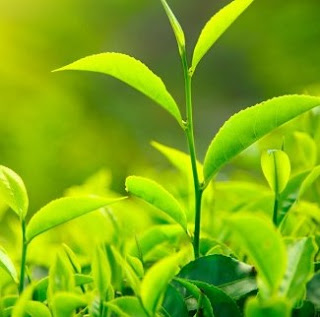
The leaves are light green, short stalked, coriaceous, grow in alternate pattern, lanceolate, serrate edges, glabrous or pubescent beneath. Leaf is hard and thick.

The size varying in length from 5 - 30 cm and about 4 cm width. Mature leaves are bright green colored, smooth and leathery in texture while young leaves are pubescent. Young leaves appear silver because they bear downy hairs on the surface.

Scientists used a leaf venation pattern to help identify the different species of Camellia plants, which means that the vein patterns in the leaves of Camellia species where of supreme importance in order to establish the variation of the species. Venation pattern is an arrangement of veins in a leaf.

Fresh leaves contain about 4% caffeine, as well as related compounds including theobromine.
Characteristics of tea leaves
Friday, January 20, 2017

Curing of tea leaves

The common categories of commercial tea – white tea, green tea, Oolong tea and black tea - result from different picking and curing techniques and have nothing to do with plant variety.

The flavor of tea comes from the method of curing and the essential oils in the leaf. Its stimulating and refreshing qualities come from the small amount of theine, chemically the same as caffeine in coffee.

Curing is a process to controlled drying in which the nutrients remaining in the leaf from photosynthesis are used to support the declining life processes of the leaf.

About 78% of total tea consumed represents black tea, a popular drink in many western countries which contains mainly oxidized polyphenols, whereas approximately 20% is green tea, which is primarily consumed in China and Japan and contains mostly non-oxidized polyphenols, more particularly catechins.
Curing of tea leaves

Wednesday, April 08, 2015

Tea leaf grading

The grading begins by labeling the tea leaves according to the country and estate where they were grown. The origin of the tea must be known as well as the leaf grade in order to have any basis for judging quality even roughly.

The labeling automatically tells a tea –grading expert much about the climate and soil conditions, which will affect the overall quality of the tea.

After variety of tea leaves and the geographic location are identified teas are further classified according to whether they are whole or broken into smaller-sized pieces.

The grading of the tea leaf differs by country and by recessing method. For example, black teas are usually divided into 2 categories: whole leaf and broken leaf.

Whole leaves
*Flowering orange pekoe – the first two leaves and leaf bud of the first growth in a season. The highest grade
*Pekoe
*Orange pekoe – popular in South America
*Pekoe souchong

Broken leaves
*Broken pekoe
*Broken orange pekoe
*Broken souchong
*Fanning – left over after higher grades of tea gathered to be sold
*Dust – fanning with extremely small particles

The large coarse leaves are usually put through cutting machines to reduce their size to the particular grades desired. Fragments remaining after the grading process are sold as fannings and dust.

Broken grades consist of smaller, broken leaves. These teas infuse faster and yield more flavour and fragrance.

Broken grades of tea are preferred, nowadays, in the United Kingdom because of their superior liquoring qualities and in the United States because of their suitability for use in tea bags.

After grading, teas are either packed as ‘speciality’ teas or blending with other teas.
Tea leaf grading

Tuesday, February 17, 2015

Rolling of tea leaves

Once tea leaves are withered to the desired status, the leaves are fed into rollers and are lightly, without pressure, conditioned in order to attain a uniform distribution of polyphenol oxidase enzymes.

These enzymes are present in epidermis tissue cells, spatially separated from their substrates. This is followed by a true rolling step in which the tea leaf tissue is completely macerated by conventional crank rollers under pressure.

Once done by hand but now performed mainly by machine, rolling transforms the flat leaves into mesmerizing twists, coils, balls or spears.

The rolling process physically crushed the leaves, opening sand exposing the leaf matrix and cellular compartment providing a more homogenous mixture for oxidative reactions and amore extractable matrix for brewing.

Rolling times vary between ten minutes and one hour. Young leaves are rolled under lighter pressure and for shorter duration compared to older leaves, in order to prevent the leaf breakage and yellowing that results from hydrolysis of chlorophyll and autoxidation of polyphenols.

In general, lightly rolled teas have mellower and gentler flavors, while leaves rolled with greater pressure break up into smaller pieces and form brews that are more brisk and intense.
Rolling of tea leaves 

Monday, July 28, 2014

Essential oil of tea leaves

Tea has a unique fresh aroma. The aroma that the tea leaves give off comes across in the tea infusion. This fragrance is also referred to as the ‘nose’ of the tea.

It is generally believed that the characteristic of various kinds of tea consist of a balance of very complicated mixtures of aroma compounds in tea.

Aromas of compounds differ according to the variety of tea, and more than six hundred different aroma compounds are found in tea.

It is quite clear that the aroma of the fermented tea has to be quite different from the aroma of green tea.

Tea leaves contain a volatile oil consisting of alcohols, aldehydes, phenols and some fatty acids.

Fresh tea leaves have a somewhat grassy smell, and the refreshing fragrances of young leaves and flower similar to lily of the valley and rose are apparent.

Some of aroma compounds identified in fresh tea leaves are mostly alcohols, including Z-2-penten-1-0l, n-hexanol, Z-3-hexen-1-ol, E-2-hexen-1-ol and linalool plus its oxides, nerol, geraniol, benzylalcohol, 2-phenylethanol, and nerolidol.

The aroma of Japanese green tea, especially first crops of spring, is characteristically refreshing with a green note caused by (Z)-3-hexenyl-(E)-2-hexenoate and hexenoate.

Main aroma components of black tea are alcoholic comp sounds such as linalool, linalool oxides, geraniol, benzyl alcohol, 2-phenylethanol, while in oolong tea, jasmine lactone, nerolidol and indole are the most abundant aroma component.

Linalool and its oxidized derivatives namely linalool oxides are the main constituents of black tea aroma. In some aroma Assam black tea, the content is as high as 60%.
Aroma compounds in tea leaves

Thursday, July 25, 2013

Aroma of tea leaves

Tea has a unique fresh aroma. The aroma that the tea leaves give off comes across in the tea infusion. This fragrance is also referred to as the ‘nose’ of the tea.

Aromas of compounds differ according to the variety of tea, and more than three hundred different aroma compounds are found in tea.

Tea leaves contain a volatile oil consisting of alcohols, aldehydes, phenols and some fatty acids. On steam distillation, black tea gives an essential oil. The characteristic aroma and flavor of tea is due to the essential oil.

The aroma of Japanese green tea, especially first crops of spring, is characteristically refreshing with a green note caused by (Z)-3-hexenyl-(E)-2-hexenoate and hexenoate.

Green tea has more of the aroma of fresh tea leaves, because of reduced enzymatic reactions during manufacturing process.

Fresh tea leaves have a somewhat grassy smell, and the refreshing fragrances of young leaves and flower similar to lily of the valley and rose are apparent.

Main aroma components of black tea are alcoholic comp sounds such as linalool, linalool oxides, geraniol, benzyl alcohol, 2-phenylethanol, while in oolong tea, jasmine lactone, nerolidol and indole are the most abundant aroma component.

The aroma complex of tea varies with the countries of origin. Slight changes in climate factors can result in noticeable changes in the composition of the aroma complex.
Aroma of tea leaves

Popular Posts

BannerFans.com